
Wash-dry-fold (WDF) seems like an easy way to grow revenue without adding a single machine. Customers drop off a bag of laundry, you wash it, dry it, fold it and hand it back for a fee. Simple, right?
Not quite. Owners who launch wash-dry-fold without a plan often find themselves buried in unlabeled bags, backed-up machines during peak hours and customers who show up for pickup before an order is even close to done. Wash-dry-fold isn't a switch you flip when running your laundromat business. It's a service, and like any service, capacity, staffing and process are critical to success.
Ian Gollahon, co-founder of Wash-Dry-Fold POS, put it bluntly in a recent Speed Queen® Laundry Nerd podcast: "Wash-dry-fold is complicated. Anything that can go wrong will go wrong." He and co-founder Brian Henderson have spent a decade building software for laundromats that offer the service, and Henderson's family has owned and run laundromats in Oklahoma since 2005. Their hard-won experience shapes several of the questions below.
Before you add wash-dry-fold laundry to your store, work through these seven questions.
1. Does My Laundromat Equipment Have Capacity to Spare?
Only if your machines have idle time to absorb the added loads. Every wash-dry-fold order competes with your existing self-service customers for the same machines. If your store already runs near full capacity during peak hours, adding WDF orders on top of that is a recipe for backups and unhappy customers.
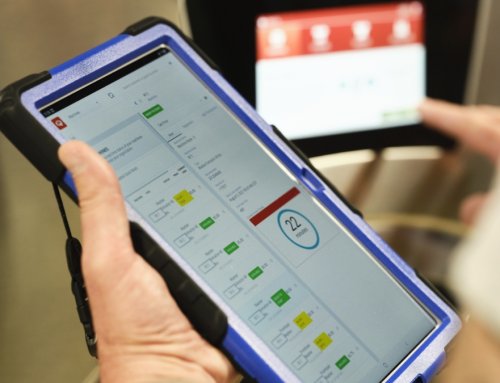
Start by looking at your actual utilization, not your total machine count. How many machines sit idle during off-peak hours? Could WDF loads run during those windows instead of competing head-on with self-service traffic? If you run Speed Queen Insights, the Owner Portal already tracks turns and machine status by store, so you can answer those questions with data rather than a gut feel. If your current lineup is stretched thin, that's a signal to talk about equipment and layout with your distributor before you commit to a launch date, not after.
2. Do I Have the Labor to Support It?
Wash-dry-fold isn't self-service. Someone still has to sort, wash, dry, fold and track every order, on top of their other job duties. And the folding is only the visible part of these laundromat services. Hidden labor is the coordination of logging orders, starting machines, tracking which bag is where and answering customer questions.
Henderson knows that hidden labor firsthand. Before his company built its own platform, his family's stores were running on seven or eight separate software programs, and attendants were expected to remember logins for five or six of them. "I wish this stuff was all talking to each other," he recalled thinking during one long shift at the store. That frustration became the founding idea for the company.
Before adding WDF to the mix, map out who handles intake, folding, order pickup and payment, and which tools they'll use to do it. If the honest answer is "whoever's on shift," that's a gap, not a plan.
3. How Do I Set Wash-Dry-Fold Pricing, Turnaround and Quality Standards?
Decide all three before you take your first bag and apply them the same way to every order. Pricing by the pound, flat rate or minimum order size all work, but only if you decide in advance and apply the standard consistently. The same goes for turnaround time. A 24-hour promise only works if your capacity and staffing can actually deliver it, every time, not just on a slow Tuesday.
Quality standards matter just as much. Define how items get sorted (colors, delicates, specialty fabrics), what happens with stains or damage and what "done" looks like before an order goes back to a customer. Written standards give your staff a consistent answer and give you a documented basis for resolving the occasional dispute or refund request.
4. How Do I Build a Reliable Intake and Tagging Process?
Log every order at the counter and tag each bag. The owner requests that shaped Wash-Dry-Fold POS, from tracking which attendant handed out an order to automating customer messages, all come back to the same problem: knowing where each order is at every step. A bag without a clear ID, a torn tag or a handwritten note that gets lost in the wash breaks that chain and can turn one mixed-up order into a lost customer.
A tight intake process, consistent tagging, a logged order number and a clear handoff from intake to wash, keeps orders traceable from drop-off to pick up. Owners can log wash-dry-fold orders and over-the-counter sales in Speed Queen Insights, the same system that reports their self-service revenue, so the order record lives somewhere more durable than a notepad. This is where a little upfront structure can save hours of guesswork later.
5. How Do I Keep Customers in the Loop Automatically?
Connect your order tracking to your machines so the system, not your attendant, tells the customer when an order is ready. Customers don't want to guess when their order is ready and staff doesn't have time to field a dozen "is it done yet" calls a day. Order tracking and automated customer messaging take that burden off your team and give customers the confidence to trust the service.
This is exactly where connected tools earn their keep. Speed Queen Insights includes a Digital API in its Gold plan, which lets third-party, wash-dry-fold platforms connect directly to your Speed Queen washers and dryers. Wash-Dry-Fold POS built its integration on that API, so an attendant can start a Speed Queen machine for a WDF order right from the POS system, the exact start value goes to the machine and the customer is messaged automatically when the order is ready. Fewer manual touchpoints mean fewer chances for something to slip through the cracks.
Learn more about how Insights supports WDF business.
6. How Do I Track Wash-Dry-Fold Revenue and Efficiency?
Keep wash-dry-fold in the same reporting system as self-service but separated by transaction type. Most WDF customers pay at the counter when they pick up, by cash or card, so payment itself isn't the hard part. The hard part is knowing what the service actually earns once you account for the machine time it consumes. Speed Queen Insights reports by transaction type, so daily revenue splits cleanly between self-service, wash-dry-fold and retail goods, and your self-service app customers and counter customers sit in one consolidated database.
That linkage also unlocks a metric Gollahon recommends every WDF owner watch: the machine time used on wash-dry-fold orders compared with the revenue those orders bring in. Because the system logs which machines each attendant starts for each order, that ratio is visible without a spreadsheet. If it swings suddenly, you know to look at your pricing, your process or both.
One more note on payments: any system that handles card transactions should be PCI DSS compliant, and Speed Queen Insights is. Connected tools aren't a risk to avoid. They're a reason to choose tools built with that protection in mind from the start.
7. What If I Have More Questions?
Your distributor has seen dozens of stores add wash-dry-fold and knows which layouts, machine mixes and workflows actually hold up under real volume. Before you finalize pricing, staffing or a launch date, a conversation with your distributor can surface capacity gaps or equipment adjustments you hadn't considered, while there's still time to plan around them.
Time to Take the Next Step
Wash-dry-fold can be a strong revenue driver for a laundromat, but only for owners who treat it as an operational upgrade, not an afterthought. If you're weighing whether your store is ready, your Speed Queen distributor can walk through your current equipment, layout and capacity to help you find the answer.
Frequently Asked Questions About Wash-Dry-Fold
Do I need new laundromat equipment to offer wash-dry-fold?
Not necessarily. The deciding factor is utilization, not machine count. If you have idle capacity during off-peak hours, your existing equipment may be enough to start. If your store is already busy through most of the day, larger-capacity washers and tumble dryers can process WDF loads in fewer turns. Your Speed Queen distributor can model both scenarios against your actual usage.
Can I offer laundry pickup and drop off along with wash-dry-fold?
Yes, and many owners do. Pickup and delivery extend wash-dry-fold to customers who may never walk into your store, which is a big part of its appeal. It also adds routing, scheduling and payment steps to the process, so most owners get their in-store intake, tagging and tracking running smoothly first, then layer on pickup and delivery.
Does Speed Queen Insights support wash-dry-fold?
Yes. Speed Queen Insights handles wash-dry-fold and over-the-counter sales alongside self-service, with reporting by transaction type. On the Gold plan, the Digital API also lets third-party wash-dry-fold platforms, including Wash-Dry-Fold POS, connect directly to your Speed Queen machines.